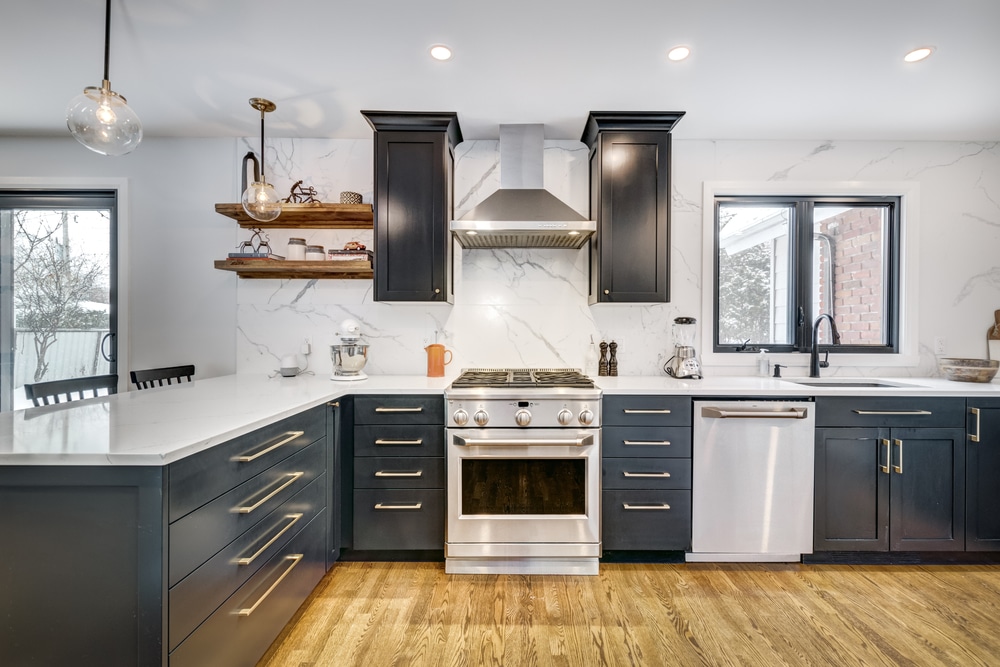


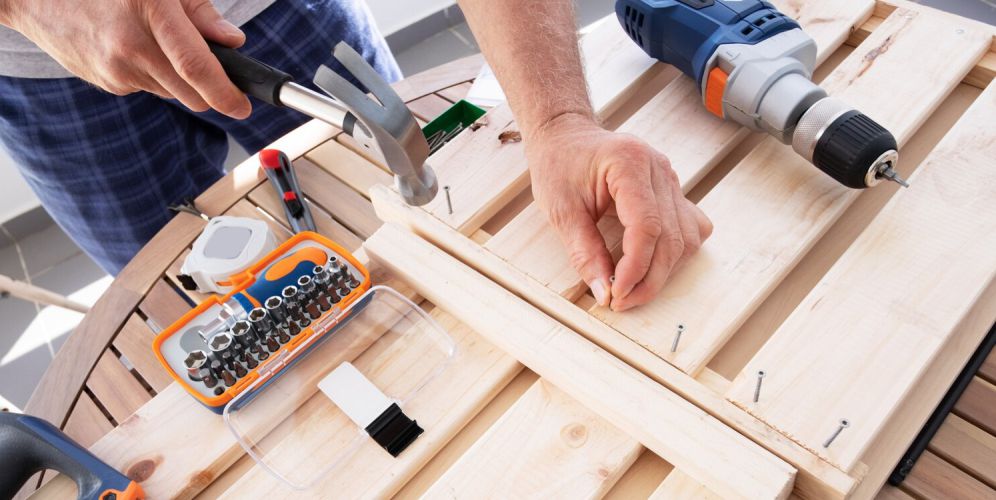
Cabinets are the single most expensive part of most kitchen renovations, usually somewhere between a third and half of the total budget. They are also the part you touch every day and the first thing anyone notices when they walk in. So it is worth understanding what actually goes into choosing and installing them, rather than just picking a door style and hoping for the best.
This is a plain guide to how kitchen cabinet installation works, what the real choices are, and what tends to go wrong when it is done badly. It applies whether you are redoing a full kitchen or just replacing tired cabinets in a North Vancouver home.
Stock, Semi-Custom or Custom: The Choice That Sets Everything Else
Before style, colour or hardware, this is the decision that drives your budget and your timeline. There are three categories, and understanding them saves a lot of confusion later.
Stock Cabinets
Pre-made in standard sizes, usually available quickly and at the lowest price. They come in fixed widths, typically in three inch increments, so your kitchen gets designed around the sizes that exist. Filler panels bridge any gaps. Stock is a sensible choice for rentals, secondary suites and budget-conscious kitchens where the layout is straightforward.
Semi-Custom Cabinets
Built to standard construction but with more flexibility in sizing, finishes, door styles and internal options. Lead times are longer than stock, and the cost sits in the middle. For most North Vancouver kitchen renovations, semi-custom hits the balance most homeowners are looking for, enough flexibility to fit the space properly without the price of full custom.
Custom Cabinets
Built from scratch to your exact layout, with no size limitations and full control over materials, finish and every internal detail. This is where you go when the kitchen has awkward dimensions, you want something specific, or you are after the highest quality. It costs the most and takes the longest, often eight to twelve weeks or more for the cabinets to be built.
What Cabinets Are Actually Made Of

The door style gets all the attention, but the box behind the door is what determines how long your cabinets last. This matters more than most people realize.
- Cabinet box. Plywood boxes are stronger and hold screws better than particleboard or MDF, and they handle moisture far better. In a kitchen, and especially anywhere near a sink or dishwasher, plywood boxes are worth the upgrade.
- Doors and fronts. Solid wood, MDF, thermofoil and laminate all behave differently. MDF takes paint beautifully and will not crack at the joints the way solid wood sometimes does, which is why most painted cabinets use MDF doors.
- Drawer boxes. Solid wood drawer boxes with dovetail joints and soft-close undermount slides are a sign of quality. Stapled particleboard drawers are the first thing to fail.
- Hinges and slides. Good quality soft-close hardware is one of those things you stop noticing precisely because it just works. Cheap hardware is the opposite.
How Cabinet Installation Actually Works
A proper cabinet installation is more careful than it looks. Here is roughly how it goes.
- The walls and floor are checked first. Almost no wall is perfectly flat and almost no floor is perfectly level, which is especially true in older North Vancouver homes. A good installer finds the high point of the floor and works from there, so the run of cabinets ends up level even when the house is not.
- Layout lines go on the wall. Level lines are marked for the base and upper cabinets before anything gets hung, so everything lines up.
- Uppers usually go first. Many installers hang the upper cabinets before the bases so they are not reaching over them.
- Cabinets are shimmed and secured into studs. Shims correct for uneven walls, and cabinets get screwed into the framing, not just the drywall. Skipping this is how cabinets end up crooked or, worse, pulling off the wall.
- Fillers, panels and toe kicks finish it off. Filler strips handle the gaps against walls, end panels hide exposed sides, and the toe kick and trim make it look built in rather than dropped in.
- Doors and drawers get adjusted last. Good hardware allows fine adjustment so every gap is even and every door sits flush. This final tuning is what separates a clean install from a sloppy one.
Where Cabinet Installations Go Wrong

When a cabinet job looks off, it is almost always one of these:
- Cabinets fastened to drywall instead of studs, so they loosen over time
- No allowance made for an out of level floor, leaving visible gaps or slanted counters
- Doors and drawers never properly adjusted, so gaps are uneven
- Measurements taken before the walls were finished, so nothing quite fits
- Appliance clearances missed, so the fridge or dishwasher does not fit as planned
None of these are exotic. They come down to careful measuring, proper fastening and taking the time to adjust everything at the end.
A Note on Older North Vancouver Homes
If your home was built before the 1980s, expect the walls and floors to be out of true, sometimes significantly. This is completely normal on the North Shore, but it means cabinet installation takes more shimming and scribing to look right.
It is also why measuring a real space in person matters so much more than working from a floor plan. A kitchen that looks straightforward on paper can hide a floor that drops an inch across the room.
Cabinets Are Part of a Bigger Picture
Cabinet installation rarely happens on its own. It has to be coordinated with countertops, which are templated only after the cabinets are set, along with plumbing, electrical and appliances.
Getting the sequence right is a big part of why a kitchen renovation runs smoothly or does not. If you are planning a full kitchen project, our kitchen renovation services in North Vancouver covers how all of it fits together, from layout through to the final finish.
Cabinet Installation FAQs
The installation itself usually takes one to three days for an average kitchen once the cabinets have arrived. The longer wait is the build time, which is a week or two for stock, several weeks for semi-custom, and eight to twelve weeks or more for full custom.
Stock suits budget kitchens, rentals and suites with simple layouts. Semi-custom is the sweet spot for most kitchen renovations. Custom makes sense for awkward spaces, specific design goals or the highest quality. Your layout and budget usually make the choice fairly clear.
In a kitchen, generally yes. Plywood is stronger, holds fasteners better and handles moisture better than particleboard, which matters near sinks and dishwashers. It is one of the upgrades that pays off in how long the cabinets last.
It is possible, but cabinet installation is less forgiving than it looks, particularly in older homes where walls and floors are out of level. Mistakes show immediately in the form of uneven gaps and doors that do not line up, and they are hard to hide. For a full kitchen, most homeowners are better off having it installed professionally.
Yes. The kitchen is one of the biggest factors in a home’s resale appeal, and clean, well installed cabinets are a large part of that. On the North Shore’s competitive market, an updated kitchen is a genuine selling feature.
Cabinets and installation together typically make up a third to a half of a kitchen renovation budget, and the range is wide depending on stock versus custom.